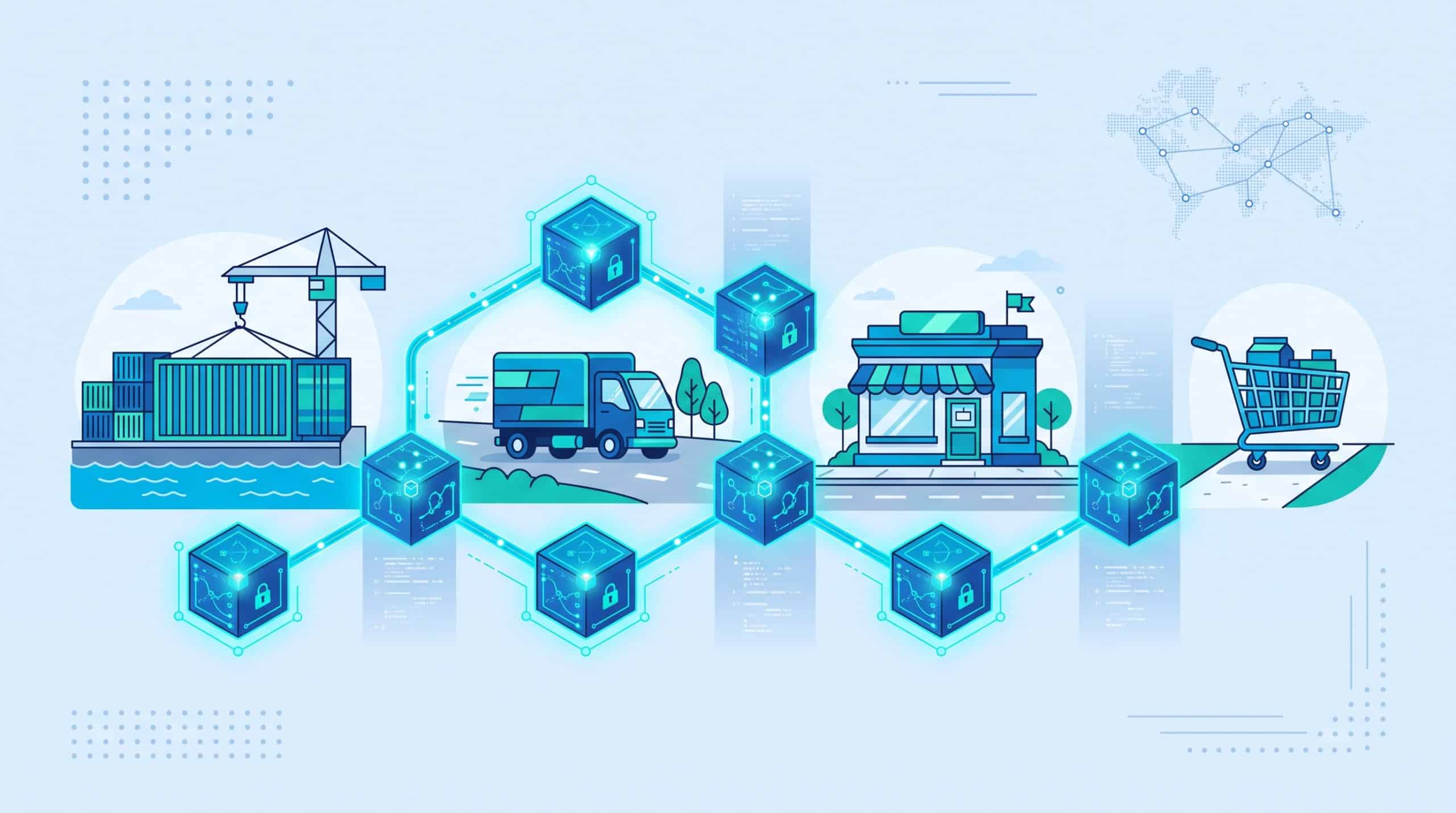

Blockchain technology is transforming the retail industry, offering secure, transparent, and efficient solutions for businesses of every size. From supply chain traceability and smart contracts to cryptocurrency payments, decentralized ledgers are reshaping how retailers operate, how they earn customer trust, and where they find new opportunities for growth. This guide explains what retail blockchain digital transformation involves, what market research says about its momentum, and how retailers are already putting the technology to work.
Understanding Retail Blockchain Digital Transformation
Blockchain in retail leverages decentralized networks and cryptographic principles to change how transactions and operations are recorded and verified. Instead of relying on a single central database, a blockchain distributes an encrypted, tamper-resistant ledger across many participants, so every party to a transaction can rely on the same shared record. That shared record is what makes the technology so relevant to retail, an industry built on high transaction volumes, long supplier chains, and hard-won customer trust.
In practice, that architecture supports several core retail capabilities:
- Secure transactions through encrypted ledgers
- Enhanced supply chain management with real-time tracking of goods
- Smart contracts for automated, efficient agreements between retailers, suppliers, and logistics partners
- Improved eCommerce security and fraud prevention
- Greater transparency and trust in the digital marketplace
What Market Research Says About Blockchain in Retail
Published estimates of the market’s size and growth trajectory differ substantially from one research firm to the next, so it is worth reading several forecasts side by side rather than relying on any single number. What the forecasts have in common is the direction: rapid, sustained growth.
- Fortune Business Insights values the global blockchain in retail market at USD 1.11 billion in 2025 and projects it to reach USD 54.09 billion by 2034, a CAGR of 54.02%. The firm also reports that North America dominated the global market with a share of 49.76%.
- Research and Markets estimates the market grew from USD 3.62 billion in 2024 to USD 4.93 billion in 2025 and expects it to reach USD 21.76 billion by 2030, a CAGR of 34.79%.
- IMARC Group puts the market at USD 825.4 million in 2024 and expects it to reach USD 26,190.1 million by 2033, a CAGR of 41.3%.
- Mordor Intelligence expects the market to reach USD 0.72 billion in 2025 and to grow to USD 6.01 billion by 2030 at a CAGR of 52.92%, with North America as the largest market and Asia Pacific as the fastest growing.
Treat any one of these projections as directional rather than definitive. The firms measure the market differently, but every forecast above points to strong multi-year growth.
Blockchain Within Retail’s Broader Digital Transformation
Blockchain adoption is happening inside a much larger wave of retail technology investment.
- Mordor Intelligence expects the digital transformation in retail market to grow from USD 285.76 billion in 2025 to USD 317.34 billion in 2026 and to reach USD 535.94 billion by 2031, a CAGR of 11.05%.
- Coherent Market Insights estimates the retail digital transformation market at US$ 249.70 billion in 2026 and expects it to reach US$ 786.03 billion by 2033, growing at a CAGR of 17.8%.
Retailer intentions point the same way. According to BDO USA, about 50% of surveyed retailers say they are considering deploying blockchain, automation, and the Internet of Things in the near to medium term. ReAnIn reports that over 40% of retail organizations utilize blockchain-based solutions.
The topic is drawing academic attention as well: a 2025 research article published on ScienceDirect addresses best practices for blockchain-driven digital transformation in cross-industry settings.
Benefits of Implementing Blockchain in Retail
For retailers weighing an investment, the appeal of blockchain comes down to a handful of concrete advantages:
- Enhanced security: Advanced cryptography protects transactions and customer data.
- Improved transparency: Decentralized ledgers create traceable, trustworthy records that partners and customers can rely on.
- Streamlined operations: Real-time tracking optimizes supply chain efficiency.
- Automated contracts: Smart contracts reduce disputes and speed up processes.
- Fraud prevention: Robust security measures protect against online fraud.
- Competitive edge: Adoption of blockchain technology drives innovation.
- New growth opportunities: Blockchain opens doors to emerging markets and business models.
Together, these benefits address some of retail’s oldest problems: knowing where goods really came from, keeping payment and customer data safe, and settling agreements between many parties without friction.
Challenges in Adopting Blockchain for Retail
Adoption is not effortless, and retailers should plan for the obstacles as carefully as the opportunities:
- Integration complexity: Connecting blockchain platforms with existing systems takes careful planning and engineering effort.
- Cost: Initial investment and ongoing maintenance costs must be budgeted for over the full life of the project.
- Regulatory compliance: Rules differ across regions, and retailers operating internationally must satisfy each jurisdiction they trade in.
- Data security: Comprehensive data security still has to be designed, ensured, and maintained around the blockchain itself.
- Skills shortage: Blockchain expertise is in short supply, and teams need training or specialist hires.
- Scalability: Systems must keep up as transaction volumes grow.
Successful Case Studies of Retail Blockchain Implementation
Supply Chain Efficiency
Companies like Walmart use blockchain for real-time product tracking, reducing delays and ensuring authenticity across their supply chains.
Decentralized eCommerce Platforms
OpenBazaar offers a peer-to-peer marketplace that uses blockchain to facilitate direct buyer-seller transactions, without a central platform sitting between the two.
Secure Cryptocurrency Payments
Overstock.com accepts Bitcoin and other cryptocurrencies, providing customers with secure alternative payment options at checkout.
Transparent Product Sourcing
Provenance uses blockchain to track the origins and journey of products, enhancing consumer trust in what they buy.
Future Trends in Retail Blockchain Digital Transformation
As the technology matures, expect blockchain to move from pilot projects into the everyday retail stack. The trends to watch include:
- Widespread adoption of blockchain-based eCommerce solutions
- Growth of decentralized retail platforms
- Increased use of smart contracts for retail processes
- Mainstream cryptocurrency payment integration
- Advanced supply chain tracking and management
- Enhanced data security and privacy measures
- Blockchain-powered loyalty programs and personalized marketing
Conclusion
Blockchain technology is set to revolutionize the retail industry by enhancing security, transparency, and efficiency, and the market research points to sustained growth in both blockchain adoption and retail digital transformation more broadly. Retailers who embrace the technology will be well-positioned to meet evolving consumer demands and stay competitive in the digital marketplace.
Ready to explore how blockchain can transform your retail business? Start by identifying the areas where increased transparency, security, or efficiency would benefit your operations most, then consider consulting with blockchain experts to develop a tailored implementation strategy.