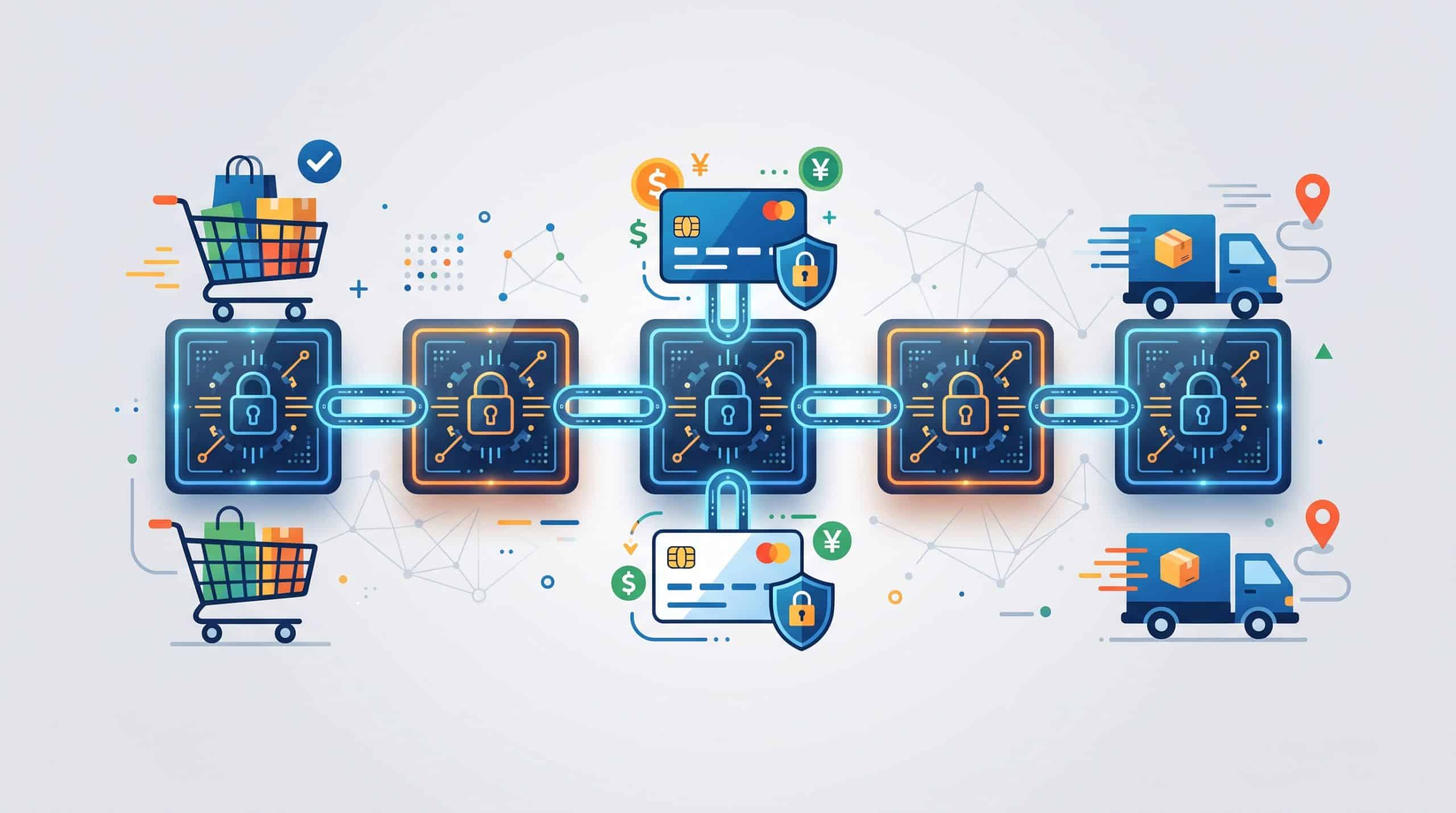

Blockchain technology is changing how online stores handle payments, customer data, and logistics by offering enhanced security, transparency, and efficiency. The investment following the technology is measurable: Intel Market Research values the global blockchain ecommerce market at USD 204 million in 2024 and projects it to reach USD 545 million by 2031, a 15.0% CAGR. This guide explains how blockchain works in online retail, its key benefits, the challenges to plan for, the solutions available today, and the trends shaping the next phase of eCommerce.
Overview of Blockchain Technology in eCommerce
Blockchain provides a decentralized, secure ledger for recording transactions. Instead of relying on a single central database that one party controls, records are validated cryptographically and shared across a network, which makes them difficult to tamper with after the fact. For online retail, that architecture enables:
- Secure, tamper-resistant transactions
- Enhanced supply chain transparency and efficiency
- Integration of cryptocurrency payments
- Improved data security and privacy
- Smart contracts for automated, trustless agreements
How Big Is the Blockchain eCommerce Market?
Research firms scope this market in different ways, so it is worth comparing several estimates side by side rather than relying on a single figure:
- Research and Markets reports that the blockchain in retail market grew from USD 3.62 billion in 2024 to USD 4.93 billion in 2025 and expects it to reach USD 21.76 billion by 2030 at a 34.79% CAGR.
- The Business Research Company puts the decentralized e-commerce platforms market at USD 13.12 billion in 2025 and expects it to grow to USD 54.38 billion by 2030 at a 32.9% CAGR.
- BSV Blockchain states that the blockchain-enabled retail market will likely exceed USD 70 billion by 2030, citing a 42.40% CAGR.
- MarketsandMarkets projects the broader blockchain market to reach USD 610.96 billion by 2031 from USD 54.08 billion in 2026, at a 62.4% CAGR, and anticipates that the retail and eCommerce segment will grow at the highest CAGR of 70.2% during the forecast period.
- BigCommerce, citing Statista, reports that the global blockchain technology market will grow from USD 17 billion in 2023 to over USD 943 billion by 2032.
Adoption indicators point in the same direction. BSV Blockchain states that in 2025 there will be 745 million B2B cross-border transactions on blockchain, with blockchain transactions in Europe reaching 466 million in the same year, and that approximately 15,174 businesses worldwide accept bitcoin as a form of payment, including 2,300 U.S. businesses. Because each firm measures a differently scoped market, check the underlying definitions before building a business case on any single number.
Key Benefits of Blockchain in eCommerce
Enhanced Security
Blockchain’s cryptographic validation ensures secure transactions and protects sensitive data from cyber threats. Because records are distributed and tamper-resistant, altering a confirmed transaction is far harder than compromising a single centralized database.
Streamlined Transactions
Direct peer-to-peer transactions reduce the number of intermediaries between buyer and seller, which speeds up processes and lowers costs for both sides of a sale.
Improved Transparency
Decentralized ledgers provide real-time visibility into transactions and supply chains. Shoppers and partners can verify what happened and when, which builds trust without requiring them to take a retailer’s word for it.
Smart Contract Integration
Self-executing contracts automate and secure transactions without intermediaries. Payment releases, refunds, and fulfillment triggers can run automatically once agreed conditions are met.
Cryptocurrency Payments
Accepting cryptocurrency enables borderless transactions and expands payment options for global customers who may not have access to conventional payment rails.
Supply Chain Efficiency
Real-time tracking and automation optimize inventory and logistics management, giving retailers a shared, verifiable record of goods as they move from supplier to customer.
Current Challenges of Blockchain Integration
Blockchain is not a plug-and-play upgrade. Retailers evaluating it should plan around these known friction points:
- Scalability concerns for high-volume transactions
- Regulatory compliance across different jurisdictions
- User adoption and education
- Interoperability between different blockchain systems
- Data privacy and security implementation
- Integration complexity and associated costs
None of these is necessarily a dealbreaker, but each affects timelines and budgets, so they belong in any implementation plan from the start rather than as afterthoughts.
Popular Blockchain eCommerce Solutions
Most retail deployments today fall into a few recognizable categories:
- Decentralized eCommerce platforms that remove the single central marketplace operator
- Blockchain-based payment gateways that settle transactions directly between parties
- Smart contracts for retail operations such as escrow, refunds, and loyalty programs
- Supply chain management solutions that track goods on a shared ledger
- Fraud prevention systems built on tamper-resistant transaction records
Best Practices for Implementation
Retailers that get value from blockchain tend to start with a focused use case rather than a wholesale platform migration. Sensible ground rules include:
- Prioritize secure blockchain transactions before expanding scope
- Consider decentralized platform integration where it fits your sales model
- Implement smart contracts where the business logic is well defined
- Optimize the supply chain with blockchain-based tracking
- Enable cryptocurrency payment options for customers who want them
- Focus on enhancing overall security across the stack
- Ensure transparency in retail processes that customers can verify
Future Trends in Blockchain eCommerce
The direction of travel in online retail points toward advanced security measures, wider adoption of decentralized platforms, and increased use of smart contracts. Expect further supply chain optimization, greater cryptocurrency integration, and enhanced retail transparency as tooling matures and more retailers move past pilot projects.
Conclusion
Blockchain technology offers significant potential for eCommerce by enhancing security, transparency, and efficiency. Challenges around scalability, regulation, and integration are real, but the attributed market forecasts above show sustained growth expectations from multiple independent research firms. Businesses that strategically implement blockchain solutions — starting with a clear use case and realistic integration plan — can gain a competitive edge in the evolving digital marketplace.
FAQs
Q: What are the main benefits of blockchain in eCommerce?
A: Enhanced security, streamlined transactions, improved transparency, and supply chain efficiency.
Q: What challenges does blockchain integration face?
A: Scalability, regulatory compliance, user adoption, and integration complexity.
Q: How large is the blockchain eCommerce market?
A: Estimates vary by scope. Intel Market Research values the global blockchain ecommerce market at USD 204 million in 2024, projected to reach USD 545 million by 2031, while broader blockchain-in-retail estimates from other firms run higher.
Q: What future trends should eCommerce businesses watch?
A: Advanced security, decentralized platforms, smart contracts, and increased cryptocurrency adoption.
Ready to explore blockchain solutions for your eCommerce business? Consider consulting with blockchain experts or technology providers to determine the best implementation strategy for your specific needs.