
Blockchain technology is transforming the retail industry by enabling secure, transparent, and efficient transactions. Beyond the buzz, a growing body of research puts real numbers on what the technology can save retailers across supply chains, payments, and back-office operations. This guide explains how blockchain works in a retail context, where the savings come from, what published research and analyst forecasts actually say, and the practical challenges to plan for before you invest.
Understanding Blockchain Technology in Retail
Blockchain creates a decentralized, tamper-proof ledger of transactions shared across a network of computers. Because every participant works from the same verified record, retailers can cut reconciliation work, reduce disputes, and give customers proof of where products come from. For retailers, the core capabilities break down like this:
- Secure transactions: reduces the risk of fraud and unauthorized activity.
- Supply chain visibility: a real-time view of product movement from source to shelf.
- Customer trust: shoppers can verify product authenticity and ethical sourcing.
- Cryptocurrency integration: supports digital currency payments alongside traditional methods.
- Smart contracts: automates agreements with suppliers, partners, and customers.
- Data security: protects customer information and transaction data.
- Transparency: makes records accessible to authorized parties without a central gatekeeper.
Benefits of Implementing Blockchain in Retail
Enhancing Supply Chain Efficiency
Blockchain improves traceability and security throughout the supply chain. Because every shipment, handoff, and inspection can be recorded on a shared ledger, retailers and their suppliers see the same data at the same time. That real-time monitoring reduces delays, shrinks the paperwork burden, and cuts the manual reconciliation that happens when each party keeps its own separate records.
Improving Customer Trust Through Product Traceability
A blockchain record lets customers look up detailed product information — origin, handling, certifications — before they buy. In categories where authenticity and ethical sourcing drive purchase decisions, that verifiable history builds trust and loyalty, and it reduces the cost of handling disputes and returns triggered by doubts about what a product really is.
Facilitating Cryptocurrency Payments
Accepting digital currencies expands payment options and taps into the growing trend of digital currency transactions. Because cryptocurrency payments settle over a decentralized network rather than a long chain of processors, they can simplify the payment flow that retailers currently depend on.
Utilizing Smart Contracts for Automation
Smart contracts execute automatically when agreed conditions are met. In retail, that streamlines tasks like inventory management, payment processing, and order fulfillment: a confirmed delivery can trigger a supplier payment without invoices being emailed, checked, and approved by hand.
Ensuring Data Security and Transparency
A blockchain ledger is tamper-resistant by design, which protects sensitive customer information and transaction data from unauthorized changes. At the same time, authorized parties get a secure, immutable record of transactions, fostering trust and accountability across the business.
What the Research Says About Retail Blockchain Cost Savings
Industry-Level Forecasts
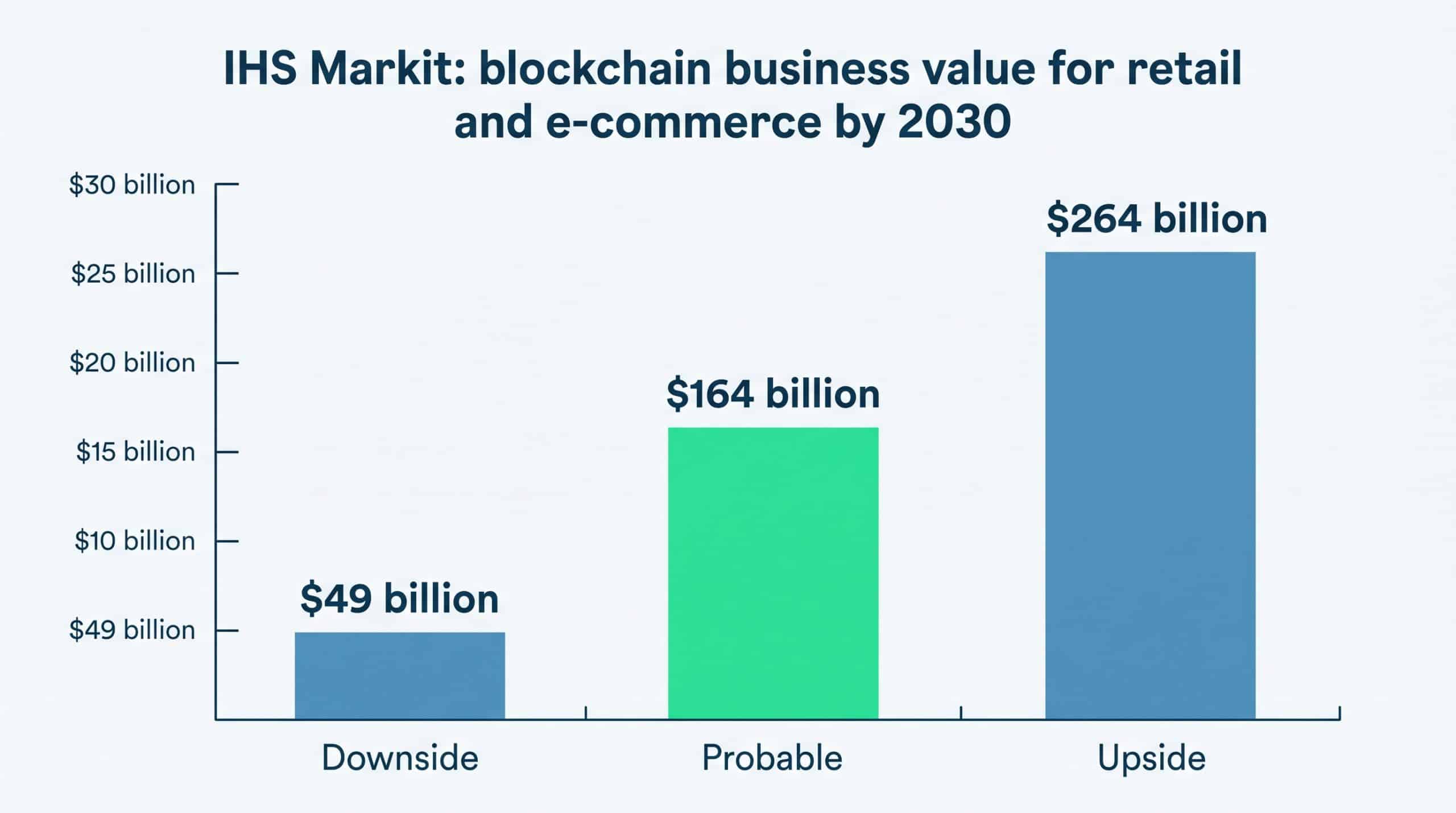
IHS Markit projected that blockchain could generate $164 billion in probable business value for retail and e-commerce by 2030, with a downside case of $49 billion and an upside case of $264 billion depending on how quickly projects move from pilots to commercial deployment. IHS Markit also pointed to trade promotion spending — which it described as currently 17% of manufacturer sales — as an area where blockchain could reduce inefficiencies, and said consumers could save as much as 30% in everyday shopping in a decentralized ecosystem like blockchain.
Supply Chain and Operating Costs
A 2023 systematic review in Sustainability cites a survey of 321 European and North-American retail organizations in which 82% of respondents expected blockchain adoption to cut costs by more than 2.5%, and 36% expected savings greater than 5%. The same review notes that blockchain can mean cheaper in-store and online transactions in retail use cases involving companies such as Coca-Cola, Starbucks, and Amazon.
Payment Processing Fees
Payments are one of the clearest cost targets. According to IHS Markit, the e-commerce payment process involves more than 10 steps and 15 separate fees for payment gateways, with transaction fees ranging from 2% to 6% — fees blockchain could reduce by simplifying the chain of intermediaries. A 2022 paper in the CEUR Workshop Proceedings reported that, according to a McKinsey study, blockchain in the financial sector could reduce the operational cost of international transactions from USD 26 to 15, lower annual operational costs by an average of USD 15 billion, and reduce investment risks by about USD 1.6 billion. In the same paper, an interviewee said blockchain use in retail direct payments could reduce transaction costs by 3–7% because intermediaries would no longer be needed.
Fashion and Luxury Retail
Consensys highlights retail fashion and luxury as a segment where blockchain can significantly reduce operating costs by improving data management, strengthening supply chain management, and reducing the risk of counterfeit and grey markets — costs that fall hardest on brands whose value depends on authenticity.
Challenges and Limitations in Achieving Cost Savings
The savings above do not arrive automatically. Most retail blockchain projects have to work through a familiar set of obstacles before the technology pays for itself:
- Blockchain integration complexity
- Data privacy and security concerns
- Regulatory compliance and adoption hurdles
- Scalability and performance issues
- Training and skill development needs
- Cost of implementation and maintenance
- Interoperability with legacy systems
- Risk management and contingency planning
The practical takeaway: treat blockchain as an operational change program, not just a technology purchase. Savings on reconciliation, fees, and fraud have to outweigh the ongoing cost of running the platform and retraining teams.
Future Outlook on Cost Savings Potential in Retail Blockchain
The future of retail blockchain looks promising, with potential for meaningful cost savings and operational efficiencies as deployments mature. Key areas of focus include:
- Advanced supply chain optimization
- Expanded cryptocurrency adoption
- More sophisticated smart contract applications
- Enhanced data security and fraud prevention
- Greater transparency in retail operations
As the technology matures, retailers who invest in these solutions can position themselves as industry leaders, driving innovation and growth in the digital marketplace.
Conclusion
Blockchain technology offers transformative potential for cost savings in retail. By enhancing security, transparency, and efficiency, it is reshaping how retailers operate and interact with customers. Despite real implementation challenges, the research and analyst evidence points to substantial benefits in supply chain management, payment processing, and data security. Retailers embracing blockchain solutions can pursue significant cost reductions while improving customer trust and operational efficiency. To stay competitive, start by identifying where blockchain could enhance efficiency or reduce costs in your own operations, and consult with blockchain experts to develop a tailored implementation strategy.