
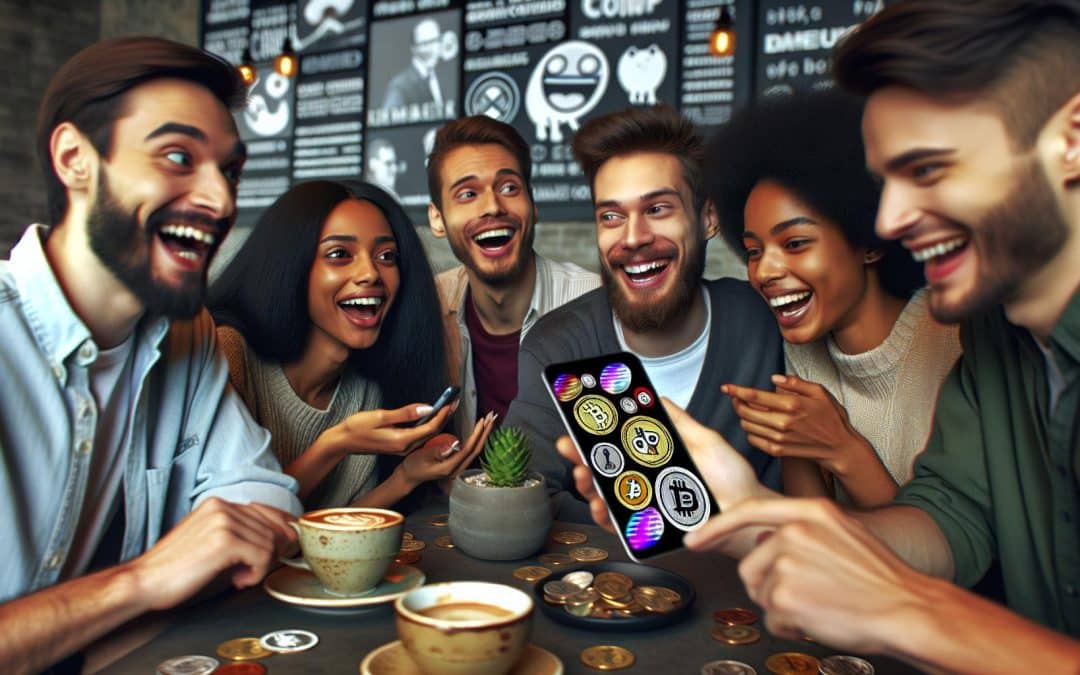
Meme coins are cryptocurrencies inspired by internet memes, jokes, trends, or other humorous themes. Their appeal often comes from online attention and community participation rather than a distinctive technical purpose. That combination can make them accessible and entertaining, but it can also make their prices highly volatile. Coinbase describes memecoins as cryptocurrencies inspired by internet memes or trends and notes their volatile nature.
What makes a meme coin different?
Many established cryptocurrency projects emphasize a particular blockchain function. Meme coins, by contrast, commonly depend on humorous branding, shareable content, social-media momentum, and an active online community. A token may begin as a joke yet attract speculative trading when its theme spreads widely. Charles Schwab characterizes meme coins as cryptocurrencies born from internet jokes and viral trends.
This does not mean every meme coin works in the same way. Projects can use different blockchains, distribution models, transaction rules, and community structures. Some incorporate smart contracts or decentralized exchange features, while others offer little practical utility beyond holding and trading the token.
Why do people buy them?
Meme coins can attract buyers because their themes are easy to recognize and their communities make participation feel social. Online discussions, humorous images, and rapidly shared narratives can increase attention. Low token prices may also create a perception of accessibility, although the price of one token does not by itself establish whether an asset is inexpensive or fairly valued.
Speculation is another important part of the market. Some buyers hope that growing attention will increase demand, but sentiment can reverse quickly. Celebrity endorsements and viral posts may influence interest, yet popularity is not evidence of technological utility, financial strength, or lasting value.
What are the main risks?
Volatility is central to the risk. When an asset depends heavily on sentiment and online momentum, its market price can rise or fall rapidly. Limited utility, concentrated ownership, low trading volume, and minimal project transparency can add uncertainty. Meme-coin markets may also be vulnerable to coordinated promotion and pump-and-dump activity.
Before buying, examine the project rather than relying on a viral post. Review its stated purpose, token distribution, development plans, community activity, and available technical information. Consider whether ownership is concentrated and whether the project explains how its token is created, distributed, transferred, or removed from circulation.
Risk management matters because a meme coin may lose much or all of its value. Only committing money you can afford to lose, avoiding emotion-driven decisions, and diversifying rather than concentrating on one speculative token can help limit exposure. These precautions do not remove the underlying risk.
How blockchain technology is used
Meme coins can use smart contracts to manage token transfers and other programmed rules. Depending on the project, those rules may address token distribution, decentralized exchange interaction, liquidity mechanisms, transaction fees, or token burning. A technical feature should be verified in the project’s published materials rather than assumed from its branding.
Token supply also requires context. A very large supply can make each token display a low nominal price, but supply alone does not establish value. Understanding circulating supply, total supply, distribution, and the rules governing future issuance provides a more useful view than looking only at the price per token.
How to approach a meme coin
Start with the same questions you would ask about any speculative digital asset: What does the project claim to do? Are its rules and distribution understandable? Is there evidence of continuing development? Does the community discuss risks as well as potential gains? Is your decision based on verifiable information or mainly on urgency and social pressure?
Meme coins sit at the intersection of cryptocurrency, internet culture, and speculative trading. Their communities can generate remarkable attention, but attention is not a substitute for utility, transparency, or careful risk assessment. Treat each token as a separate project, verify its mechanics, and account for the possibility of substantial loss before deciding whether it fits your financial goals.